
The Staunch Calvinist

"Absolute sovereignty is what I love to ascribe to God." - Jonathan Edwards


God's Absolute Sovereignty: Resources used

The document can be found here.

General Resources used

  • Wayne Grudem; Systematic Theology Chapter 16 – God’s Providence
  • A.W. Pink; Sovereignty of God
  • R.C. Sproul; What is Reformed Theology?
  • David N. Steele, Curtis C. Thomas, S. Lance Quinn; The Five Points of Calvinism: Defined, Defended, and Documented
  • James R White; Potter’s Freedom: A Defense of the Reformation and the Rebuttal of Norman Geisler’s Chosen But Free
  • ESV Study Bible
  • ESV MacArthur Study Bible
  • ESV Reformation Study Bible
  • NLT Study Bible
  • HCSB Study Bible

Verses

Commentaries

The Word software resources

  • The software can be downloaded from here.
  • Various modules can be download from he...

John Owen's 17 Differences Between the Old and New Covenants

Here is a summary of Owen’s 17 differences between the Old Covenant and New Covenant, taken from his Hebrews 8:6 commentary. Sometimes I have retained his wording, but other times I have formatted them differently. You can find an online version of the commentary at Study Light.

There is also a great collapsible outline made by Brandon Adams at http://www.1689federalism.com/owen/demo/owen.html.

Difference 1

  • These two covenants differ in the circumstance of time as to their promulgation, declaration, and establishment. The first covenant was made at the time that God brought the children of Israel out of Egypt, and took its date from the third month after their coming up from thence, Ex 19:24. From the time of what is reported in the latter place, wherein the people give their actual consent unto the terms of it, it began its formal obligation as a covenant. The new covenant was declared and made known “in the latter days,” Heb. 1:1-2; “in the dispensation of the fullness of times,” Eph. 1:10. And it took date, as a covenant formally obliging the whole church, from the death, resurrection, ascension of Christ, and sending of the Holy Ghost.

Difference 2

  • They differ in the circumstance of place as to their promulgation; which the Scripture also taketh notice of. The first was declared on mount Sinai; the manner whereof, and the station of the people in receiving the law Ex 19:18. The other was declared on mount Zion, and the law of it went forth from Je...

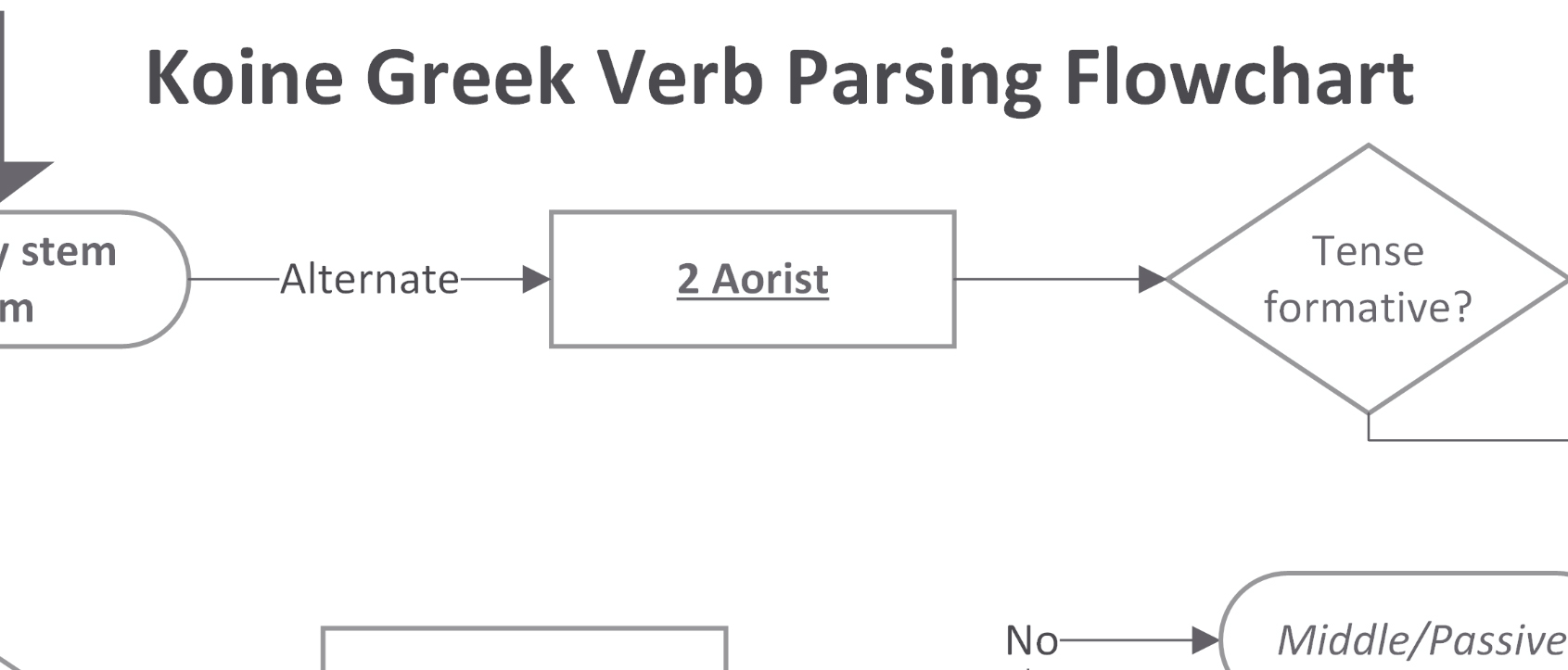
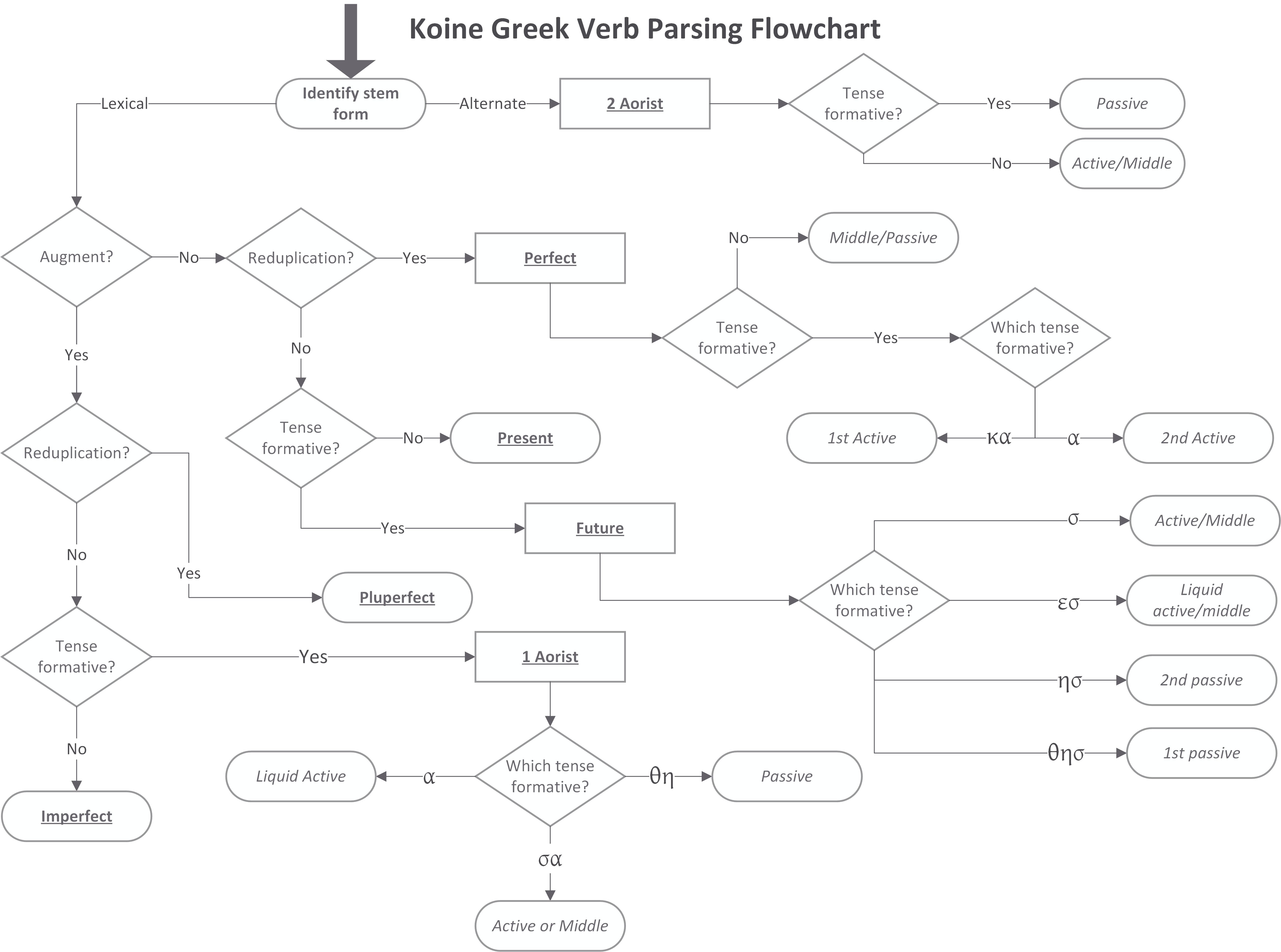
Koine Greek Verb Parsing Flowchart

<>

In the past few months, I’ve been pushing myself to continue my study of Greek which I began in 2013, having finished the section on verbs in Mounce’s Basics of Biblical Greek, I started looking for flowcharts to help me with parsing. I came across one on which I based mine.

I pray that it is helpful to you.

Edit: There was a mistake that I corrected concerning the 2 Aorist. The tense formative σα goes with passive voice instead of the active/middle.

PDF PNG SVG Visio


Quotes from A. W. Pink's The Divine Covenants

This is my organized citations from A. W. Pink’s The Divine Covenants. The whole book is available online and that is how I collected these citations and corrected some typos and other minor errors.

It has been argued by Brandon Adams that the major theses of Pink was consistent with 1689 Federalism, which teaches that only the New Covenant is the Covenant of Grace. All the other OT covenants were not “administrations” of the Covenant of Grace. You will not find in this work the model of “one covenant, multiple administrations” that is associated with Westminster Federalism. Rather, you will find that all of the OT covenants “adumbrated” the “everlasting covenant of grace”, were subservient to the divine purpose of mercy and grace and contained gracious promises.

There are some statements which could be interpreted in favor of Westminster Federalism, which I have also included under the heading “Westminster Sounding Statements”. But in reading these we must keep in mind the main theses of the work and how Pink uses certain words, for example, “administration.” I do believe that a fair interpretation can be given to these statements without doing violence to the meaning of Pink, but I’ll leave that task to the interested reader.

One difficult statement for me to interpret has to do with the idea of “renewal.” For example:

Just as the various Messianic prophecies, given by God at different times and at wide intervals, were suited to the local occasions when they w...


Resources for studying the Christian Sabbath

Written Resources

  • Philip S. Ross, From the Finger of God: The Biblical and Theological Basis for the Threefold Division of the Law (Fearn, Ross-shire, Scotland: Christian Focus, 2010).
  • C. P. Arand, C. L. Blomberg, S. MacCarty, & J. A. Pipa, Perspectives on the Sabbath: Four Views, ed. C. J. Donato (Nashville: B&H Pub., 2011).
  • Joseph A. Pipa, Jr, The Lord’s Day (Fearn: Christian Focus, 1997).
  • Robert Paul Martin, The Christian Sabbath: Its Redemptive-Historical Foundation, Present Obligation, and Practical Observance (Trinity Pulpit Press, 2016).
  • Francis Nigel Lee, The Covenantal Sabbath (London, ILQ: Lord’s Day Observance Society, 1974). Available at http://www.the-highway.com/Covsab_TOC.html.
    • This is a very extensive work on the Sabbath, which is out of print, but available online.
  • John Owen, A Treatise On The Sabbath (Forgotten Books, 2015). A photocopy edition, which is also available online at https://archive.org/details/treatiseonsabbat00owen.
  • Richard Barcellos, etc, Going Beyond The Five Points, ed. Rob Ventura (San Bernardino, CA: [CreateSpace Independent Publishing Platform], 2015). pp. 53-56.
  • Richard Barcellos:
  • Roger T. Beckwi...

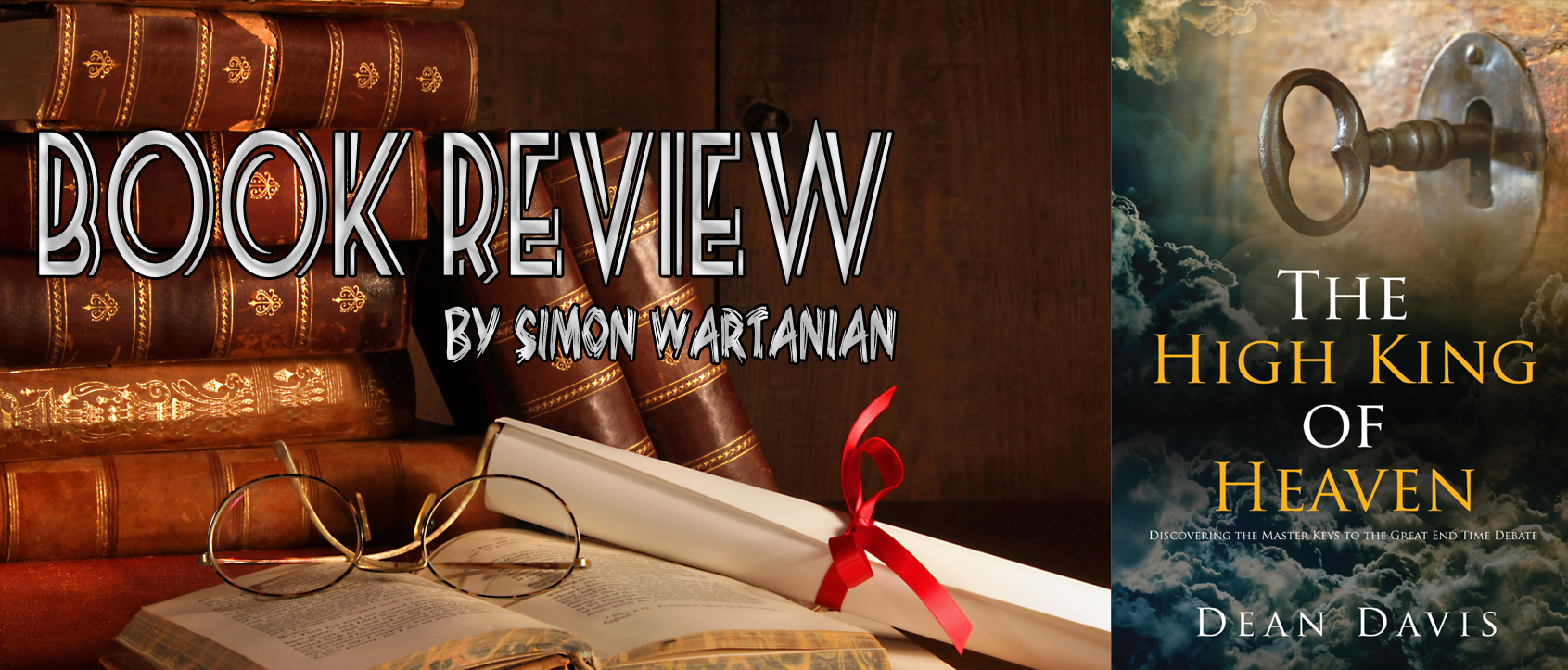
Review of Dean Davis' The High King of Heaven on Amillennialism

Dean Davis - The High King of Heaven:

Discovering the Master Key to the Great End Time Debate

The subtitle indeed is a bold claim, saying that in this book we will discover “the master key” to the End Time debate. I believe we indeed do discover the master key to the End Time debate.

This book is nothing like the others that I’ve read on Amillennialism (Kingdom Come, The Bible and the Future, The Case for Amillennialism), it dares to go and try to interpret the difficult texts in support of premillennialism. It is anti-premillennial as well as, but in lesser tone against Postmillennialism. This is all done in a tone of brotherly love. I enjoyed that aspect of the interaction.

Amillennialism

This book lays out the classic view of Amillennialism which is Dean Davis[1] believes (as others also do) is the classic eschatology of Church History and the Reformation.

The word amillennialism means no millennium. However, amillennarians do not deny the existence of a millennium, only that it begins after the Parousia and that it will last for a literal thousand years. Instead, they teach that the thousand years of Revelation 20 symbolize the present Era of Proclamation, during which time Christ reigns with (the departed spirits of) his saints in heaven. Amillennarians are, then, “present-millennarians.” Pages 23-24

Basically, Amillennialism teaches that the Millennium of Revelation 20 started from the cross and will end at the Second Coming of our Lord, spa...


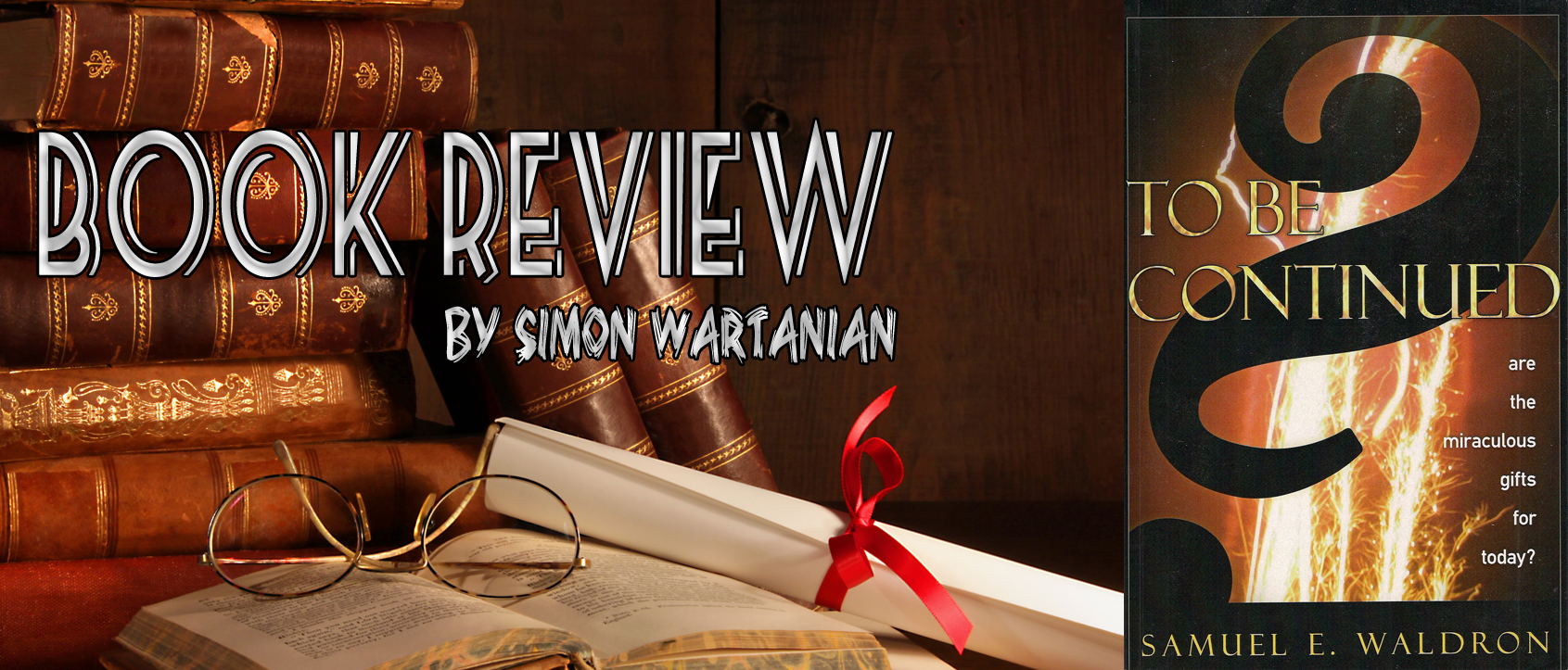
Review of Sam Waldron's To Be Continued?

To Be Continued?

Are The Miraculous Gifts For Today?

Dr. Waldron is a respectful and good Christian scholar, but this work was not written for the big scholars, but was written for the lay Christian who is interested in topic of the gifts of the Holy Spirit.

I liked the book and I thought that it was a pretty good case for cessationism. He tried to interact for example with Grudem on some points.

The Argument

The argument is basically:

1. There are no apostles
2. Therefore there are no prophets
3. Therefore there are no tongue-speaks
4. Therefore there are no miracle-workers

1. Apostles

First of all, by the use of Ephesians 4:9-11 he spends a paragraph or two to say that the apostolate was a gift. The word for gift in verse 9 is not the usual χάρισμα (charisma). He does not interact with those who do not accept that the apostolate was a (spiritual) gift, but rather a ministry or an office. This in my opinion is the biggest flaw in his argument. 

The Cascade Argument is built around and based upon the point that the greatest "gift" – the apostolate has ceased in the first century. He in fact makes a good case on the cessation of the apostolate, but does not make a convincing case that it was a spiritual gift like those mentioned in 1Cor 12:7-10 for example. Therefore, his Cascading Argument becomes weak. This is a point that Matt Slick also brought in the back-and-forth in their debate.

The argument basically starts with, if the greatest gift h...


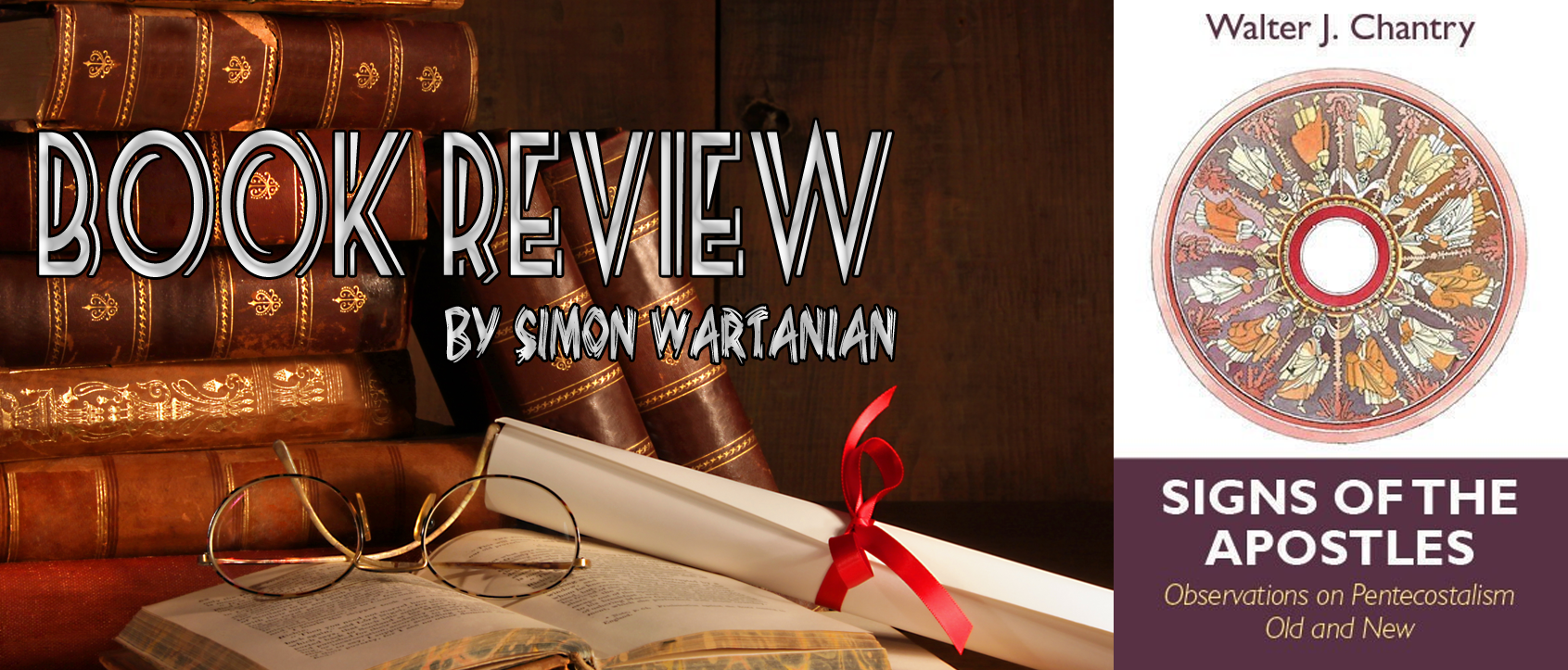
Review of Walter J. Chantry's Signs Of the Apostles

Signs of the Apostles

Observations On Pentecostalism Old And New[1]

My feelings are mixed concerning this small volume. I believe that his case for cessationism did not stand. I believe that he misused some passages to make his case. Here are a few things that raised my eyebrows.

First, he argues that miracles were given for attestation from the narrative of Moses (Ex 4:5) and NT. No one disagrees, but he makes attestation the primary purpose of miracles. And not simple attestation, rather attestation for prophetic ministry. Miracles were connected with the prophets as he tries to argue from Ex 4:5 and Deut 34:10-11 (later from Elijah's example in 1Kings 18:36). But then he raises the anticipated objection about the miracles of Samson or the other prophets, his answer is not satisfying. He basically says that the "history is incomplete" (p. 11), i.e. we do not have everything that they did, therefore, they must have done some prophetic stuff as leaders of God's people. That is unsatisfactory.

Second, he uses Psalm 74:9 to say that "This is a striking endorsement of the principle that only prophets work miracles. Where miracles are performed we should expect to hear the inspired Word of God spoken. When there is no prophet, there are no signs." (p. 12)

Here pastor Chantry understands the signs to refer to the miracles of the prophets. But I believe what is a more proper sense of the verse is to speak of the Temple. The enemies of Israel as they are described in ...


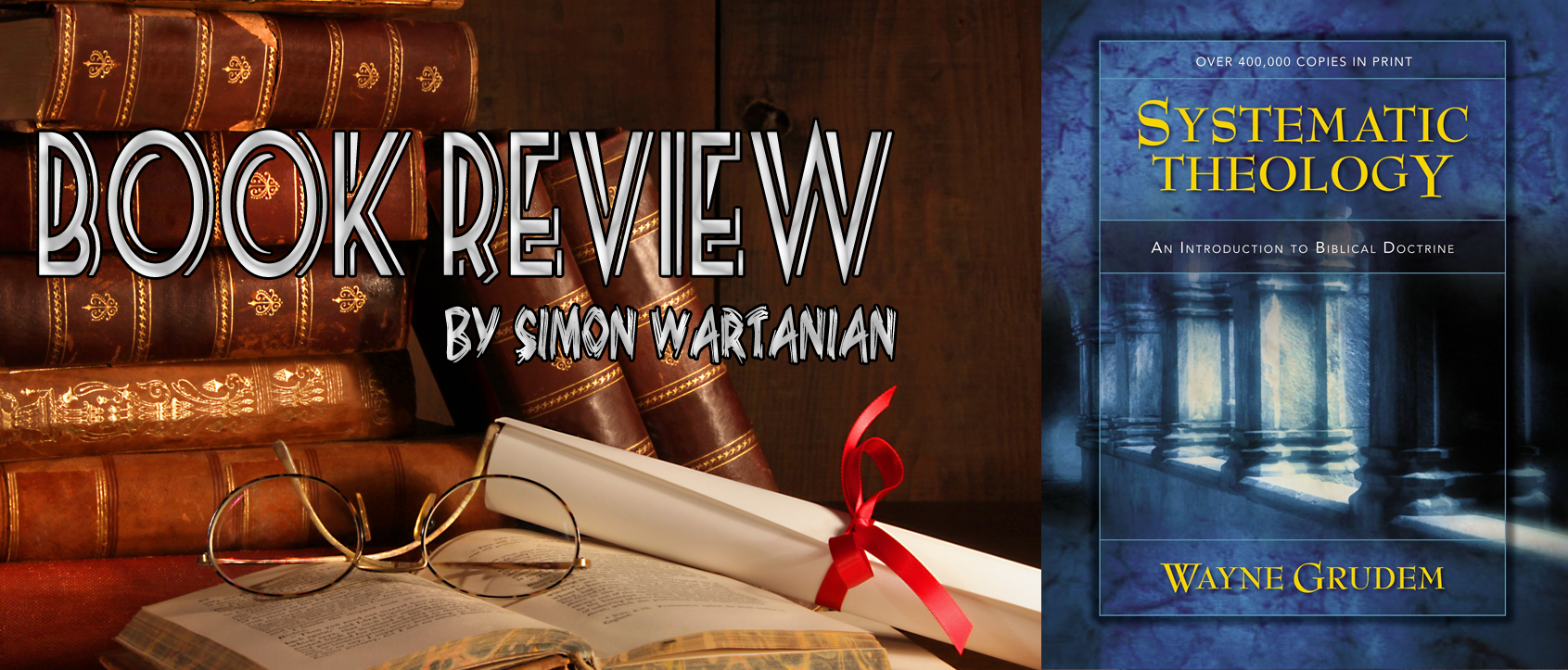
Review of Wayne Grudem's Systematic Theology

Introduction

I purchased this book because I wanted to have a good biblical case for each doctrine that I was interested in looking at. At that time I was interested in learning more about God’s sovereignty.

I never thought that I’d read such a large book with 57 chapters of biblical doctrine, but I am thankful that God sustained me through the journey that I had with Wayne Grudem in biblical doctrine.

Why it’s awesome

A lot of reasons can be given why this Systematic Theology is great. It is the first Systematic Theology that I’ve picked up and I know for certain that I will go back to it many times.

In a certain sense Dr. Grudem’s job is simple, find the passages which speak of a particular doctrine and explain what they say. But it is the manner in which he cites and explains the passages that is encouraging. He always explains the contexts and I cannot think of a citation that is out of context. He lays out the context, explains what the passages means in context and it’s relevance to the present topic.

I love those fruitful footnotes. I would often skip footnotes thinking that they only refer to works cited, but that’s not the only thing that Dr. Grudem does in his footnotes. He often explains things more technical, makes a particular case for something, refers to a relevant topic in his Systematic Theology or engages with the other side. 

His handling of the Holy Scriptures is truly aspiring. I pray that God would given me the same love for the ...


The Early Church Fathers on Eschatology (especially the millennial question)

This work is based on Dr. Charles E. Hill’s fine work entitled Regnum Caelorum: Patterns of Millennial Thought in Early Christianity. In it, he surveys eschatological thought in the first three centuries of the church. One focus of the study is the interesting observation of something common in all premillennialists (except one, Methodius of Olympus [c. 270-311]) that did not believe in the immediate entry of believers into heaven. Rather, believers and unbelievers were held in some subterranean place until the resurrection and the millennium. On the other hand, those who believed in an intermediate state in heaven, gave no indications of chiliasm (belief in an earthly millennium), but rather, some of them even give explicit evidence of non-chiliasm (i.e., amillennialism). What I’ve done here, is search for the fuller statements of the authors from the early church which are freely available in the Schaff sets on CCEL, and included citations of Dr. Hill from the book itself.

I thought of sharing it on the internet for anyone interested in these issues. In reading these statements, you will find both the good and the bad of the exegesis of the ancient fathers.

(For those not able to see the IFrame, here is the link.)